Resource / 29th Apr 2026
Case Study | Mega pollution and human rights in As Conchas water reservoir
When weak enforcement harms people and nature: Spain’s livestock megapollution ruling
Across Europe, industrial livestock is expanding rapidly, often times said to meet growing demand for cheap meat. This uncontrolled growth has come at a high cost for both people and nature.
A landmark Court case in Spain has exposed what happens when environmental rules exist on paper but fail in practice. In the region of Galicia, the Court found that authorities did not act against severe pollution caused by industrial pig and poultry farms, violating residents’ fundamental rights.
With the final ruling upheld in 2026, the case sends a powerful message: environmental protection is not optional. It is a legal obligation tied directly to human rights.
The impact on people
For years, communities in the A Limia region lived with the consequences of improperly authorised livestock expansion. Hundreds of industrial farms produced vast amounts of manure, which leaked into water systems and polluted a nearby reservoir, while also becoming airborne as bioaerosols.
Residents reported:
- Local waters contaminated with dangerously high nitrate and bacteria levels
- Persistent foul odours that made daily life unbearable
- Health issues linked to polluted water and air
Scientific evidence presented in Court showed extreme nitrate pollution and even antibiotic-resistant bacteria in the water, posing serious long-term health risks.

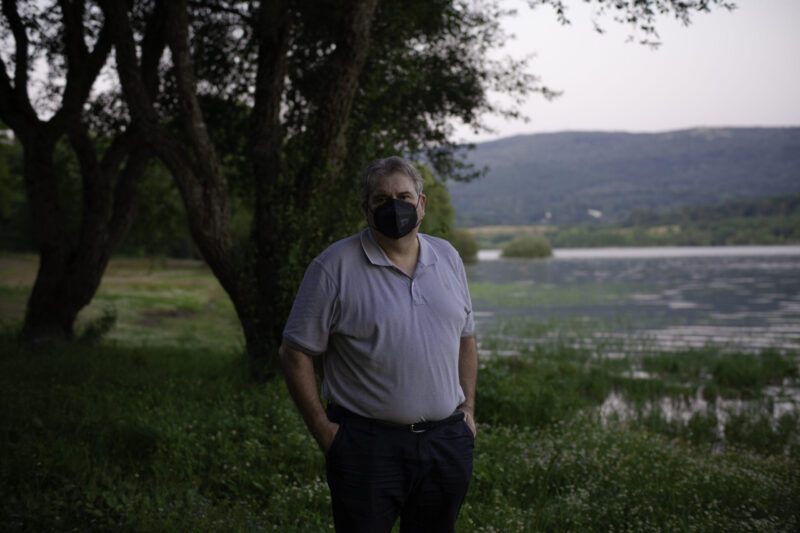
After years of being ignored by local authorities, justice is finally being served. I hope that one day our lives, and our children’s lives, can return to what they once were. This ruling will also help other communities like ours to defend their rights. It is deeply troubling to know that we have been treated as a ‘sacrifice zone,’ to know that our fundamental rights were violated. (Mercedes Álvarez de León, a claimant in the case and local business owner)
The Court concluded that authorities’ failure to act made life in the area “unviable” and breached rights to health, private life, and a healthy environment.
The role of EU law
The situation in Spain did not occur in a legal vacuum. The EU already has laws designed to prevent exactly this kind of pollution, including:
- The Nitrates Directive, which aims to reduce water pollution from agricultural runoff and;
- The Water Framework Directive, which requires Member States to monitor nitrates in surface waters (article 10) and groundwater bodies (annex V, section 2.4.2) and to take appropriate measures to limit their concentration.
- The Industrial Emissions Directive (IED), which regulates pollution from large industrial installations, including intensive livestock farms.
Yet Spain has repeatedly failed to comply with EU water protection rules. In fact, the EU’s top court has already found the country in breach of the Nitrates Directive due to insufficient action on agricultural pollution.
In Galicia, authorities were aware of rising pollution levels but failed to take effective preventive measures. The Court highlighted this “inactivity” as the core reason for the human rights violation. EU laws provide a regulatory framework, but without enforcement and political will, they cannot protect people or nature.
Why weakening EU environmental laws is a problem
This case comes at a crucial moment for EU environmental policy. Through its Environmental Omnibus, the EU wants to further weaken the Industrial Emissions Directive, which sets some limits on pollution from mega-farms. The Nitrates Directive, a cornerstone of EU water protection, has been under evaluation since December 2023, and the European Commission made a political decision to “review and revise the Water Framework Directive” in 2026 to facilitate access to critical raw materials in Europe, despite the overwhelming opposition to the revision of the directive provided during the call for evidence..
The situation in As Conchas shows why these rules matter. Without them, residents would have had little to no legal basis to challenge the pollution affecting their water, health, and daily lives. These laws are sometimes the last barrier protecting people from corporate greed.

When protections are weakened even further, authorities are more likely to delay or avoid taking action, even in the face of clear evidence. This creates space for intensive agriculture to pollute without adequate safeguards, while communities are left to navigate long and complex legal battles just to defend their basic rights. Without clear and enforceable standards, accountability becomes significantly harder to achieve.
What’s at stake
This landmark ruling establishes a powerful precedent: environmental degradation caused by intensive agriculture can amount to a violation of human rights.
It also sends a clear signal to EU policymakers.
At a time when the EU is considering changes to key environmental laws, this case demonstrates what is at stake:
- Clean water for communities
- Protection of ecosystems from agricultural pollution
- Accountability of public authorities and industry
The outcome in Spain shows that when enforcement fails, courts may step in, but only if these laws exist. Citizens should not have to rely on lengthy legal battles to secure something as basic as clean air and water. Stronger enforcement is essential to prevent harm before it occurs, rather than addressing it after years of damage.
At the same time, EU decision-making must reflect the needs and rights of its citizens. Weakening environmental protections risks shifting the burden onto communities. Stronger and well-enforced laws can ensure that economic activity does not come at the expense of public health and the environment.
Press Material
Press releases
- Court rules Spain breached residents’ human rights in landmark case on livestock megapollution
- El Tribunal Supremo confirma la sentencia pionera de As Conchas por vulneración de derechos fundamentales ante la contaminación proveniente de la ganadería industrial
Legal materials
Other readings:
- ‘I am always tired’: life in the long shadow of factory farming in Europe | Europe | The Guardian
- ‘We’re being invaded by pigs’: Spain’s pork revolution faces backlash | Meat industry | The Guardian
- ‘It smells like a decomposing body’: North Carolina’s polluting pig farms | The Guardian
- Inside the mining lobby attack on key EU water law
Footage/images to use
See here.
Latest News + Resources
News | 10th Aug 2026
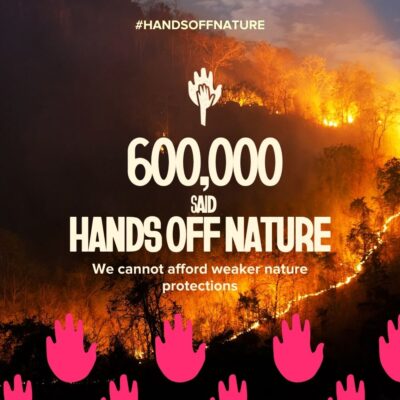
Over 600,000 call on EU to defend nature laws as wildfires sweep across Europe
News | 12th Jun 2026